Fewer Visitors, More Cargo
BRM Team
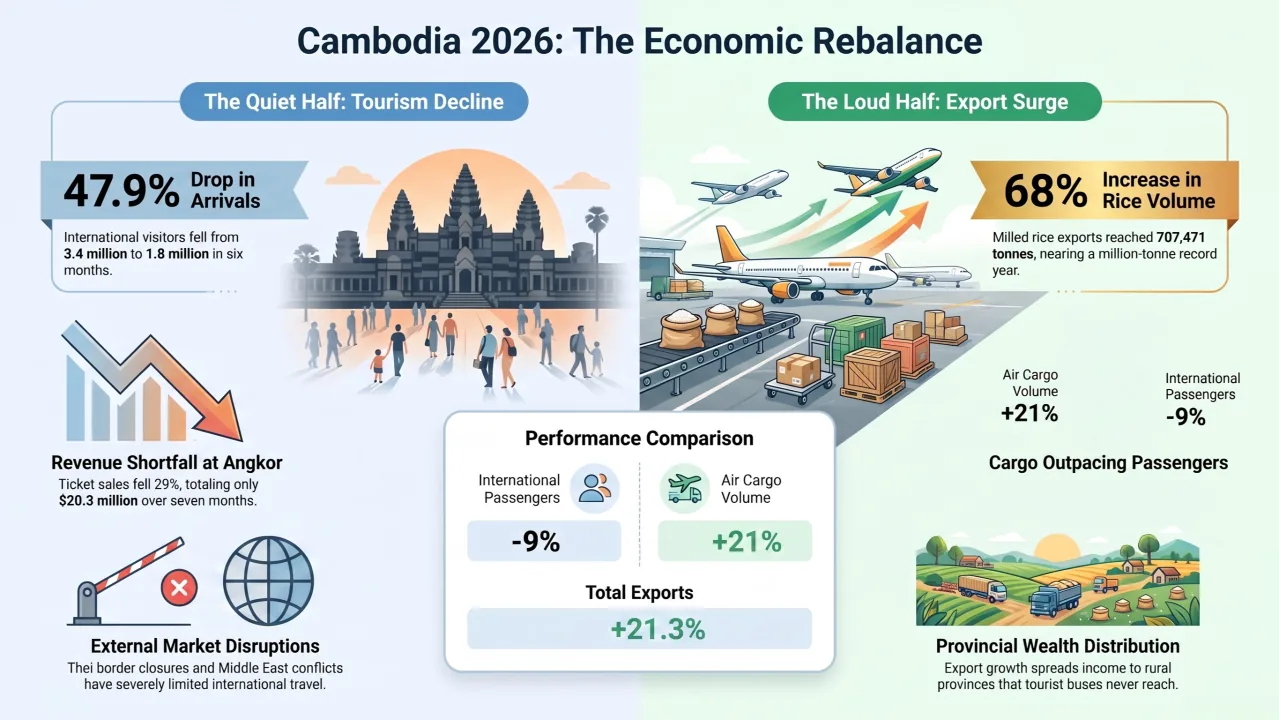
TABLE OF CONTENTS
SHARE
Last week's civil aviation report has two numbers in it that clearly do not talk to each other. International passengers through Cambodia's airports are down 9 percent this year. Air cargo through those same airports is up 21 percent.
Same runways, same ground crews. Fewer people, more boxes.
The quiet half
The tourism numbers are hard to read gently. International arrivals fell 47.9 percent in the first half, from 3.4 million visitors to 1.8 million. The land border with Thailand has been shut since last year's fighting, the war in the Middle East has cut flights into the region, and Cambodia's reputation abroad has taken its own beating. Take Thai travellers out of the count and arrivals are still down 29.6 percent, so this is not one closed border doing all the damage.
Angkor sold $20.3 million in tickets over seven months, 29 percent below last year. The temples are as good as they have ever been. That was never the problem.
We are not going to dress that up. Guides, drivers, vendors and hotel staff are having a very bad year. The one genuine cushion is record numbers of Cambodians touring their own country, and much as we enjoy seeing it, a domestic weekend does not spend the way a two-week foreign holiday does. Siem Reap is full of people we respect getting through a season nobody planned for.
The half nobody is quoting
Rice is having a completely different year.
Cambodia's total exports are up 21.3 percent. Milled rice is up 68 percent by volume, 707,471 tonnes in seven months, which puts the country within reach of its first million-tonne year. And there is that cargo figure again: 21 percent more freight through the same airports that are handling fewer passengers.
Somebody out there is eating all of this. They are simply not flying in to collect it themselves.
What it looks like from a farm province
Kampong Thom has no temple on the tourist circuit, no hotel strip, and nobody has ever booked a flight to see it. The year here is measured in paddy. For most of the families we work with, export demand decides whether a season was good or bad, and not much else gets a vote.
So none of this is abstract from where we stand. It is what the trucks in the yard are doing. Money earned by shipping what the country grows ends up in provinces no tour bus goes near. Tourism will come back and we will be glad when it does; nobody in this business wants a weak Siem Reap. But exports carried the weight this year, and the roads, dryers, storage and cold chain that get a crop out of a province deserve the same patience the country has always shown its temples.
Going where the buyers are
There is one thing an exporter can do in a year when fewer people come, which is go to them.
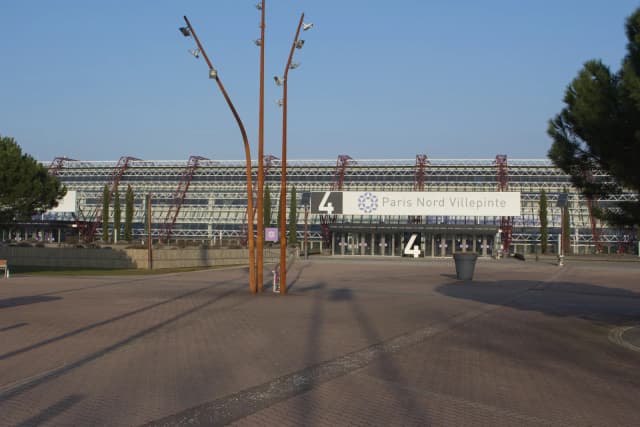
The Rice Federation's president said this month that Cambodia has to show up at the big international food fairs if it wants to sell its premium rice properly. We agree, and we are already booked. White King Elephant will be at SIAL Paris in October, next to the Federation's pavilion, rice cooking all day and the bags open so buyers can put a hand in the grain. Aroma sells jasmine better than any brochure we have ever printed.
Come hungry. We would rather feed you than email you a spec sheet.
BRM Agro is Cambodia's vertically integrated rice business, based in Kampong Thom, and the maker of White King Elephant premium jasmine rice.
Other Insight You Might Like...
27 September 2026
Hall 8, Stand C016
BRM Agro takes White King Elephant rice to SIAL Paris, Hall 8, stand C016, 17 to 21 October 2026, and the 2027 EU rice safeguard every buyer will ask about.
8 September 2026
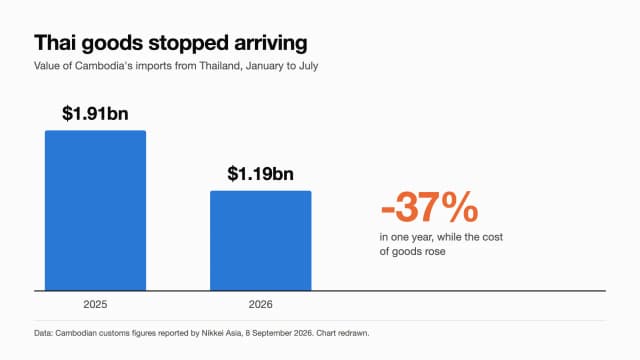
The Export Standard Just Arrived in the Domestic Market
Cambodian goods went from 3 percent of the domestic market to about 30 percent, but total industrial output fell. The share moved, the pie shrank, and traceability is what decides who keeps the shelf.
