Hall 8, Stand C016
BRM Team
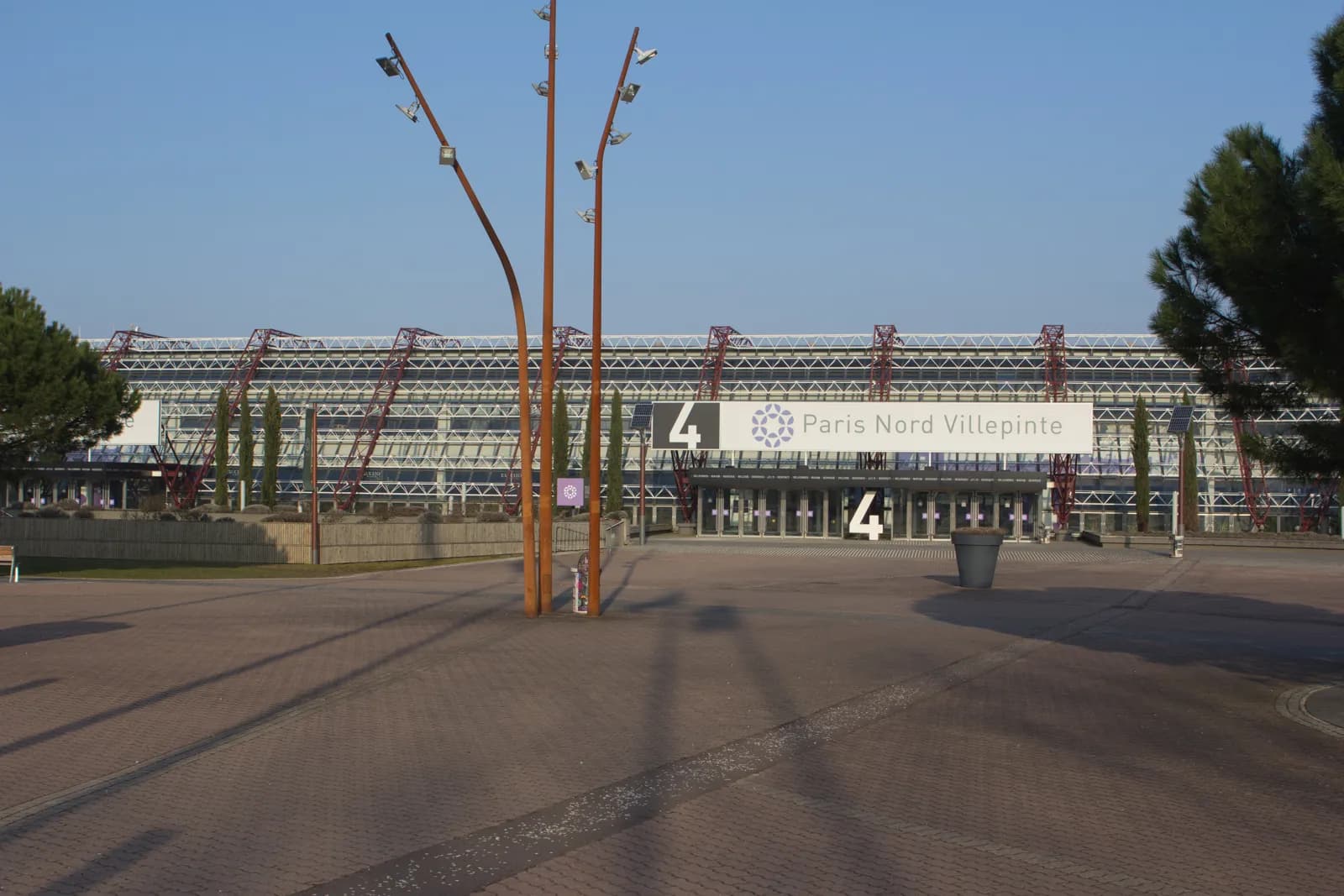
TABLE OF CONTENTS
SHARE
Photo: the exhibition halls at Paris Nord Villepinte, where SIAL Paris is held. Poudou99, CC BY-SA 4.0, via Wikimedia Commons.
Our stand at SIAL Paris is C016, in Hall 8, under the Cambodia Rice Federation flag. It is a small stand. There is room for the rice and for the people who know where it came from.
At the last edition, in 2024, the organisers counted 7,500 exhibitors from 127 countries and 285,000 visitors. This October the show opens again at Paris Nord Villepinte, from 17 to 21 October, and White King Elephant will be one of those 7,500 or so.
Why a Kampong Thom mill goes to Paris
We wrote in August that Cambodian rice is not the cheapest in Asia, and that the Cambodia Rice Federation says so itself. An origin that cannot win on price has to be met in person.
The export figures this year make the same point from another side. In the first eight months of 2026 Cambodia shipped 792,212 tonnes of milled rice, up 67.5 percent on the same months last year. The value rose 33 percent, to $464.1 million.
The volume grew by two thirds and the value by a third.
More rice is leaving the country for less money per tonne. How much of that is the world price and how much is the mix of what was sold, we cannot say from the headline figures. Neither is something a mill fixes from Kampong Thom. What a mill can do is put the better rice in front of the buyers who pay for it.
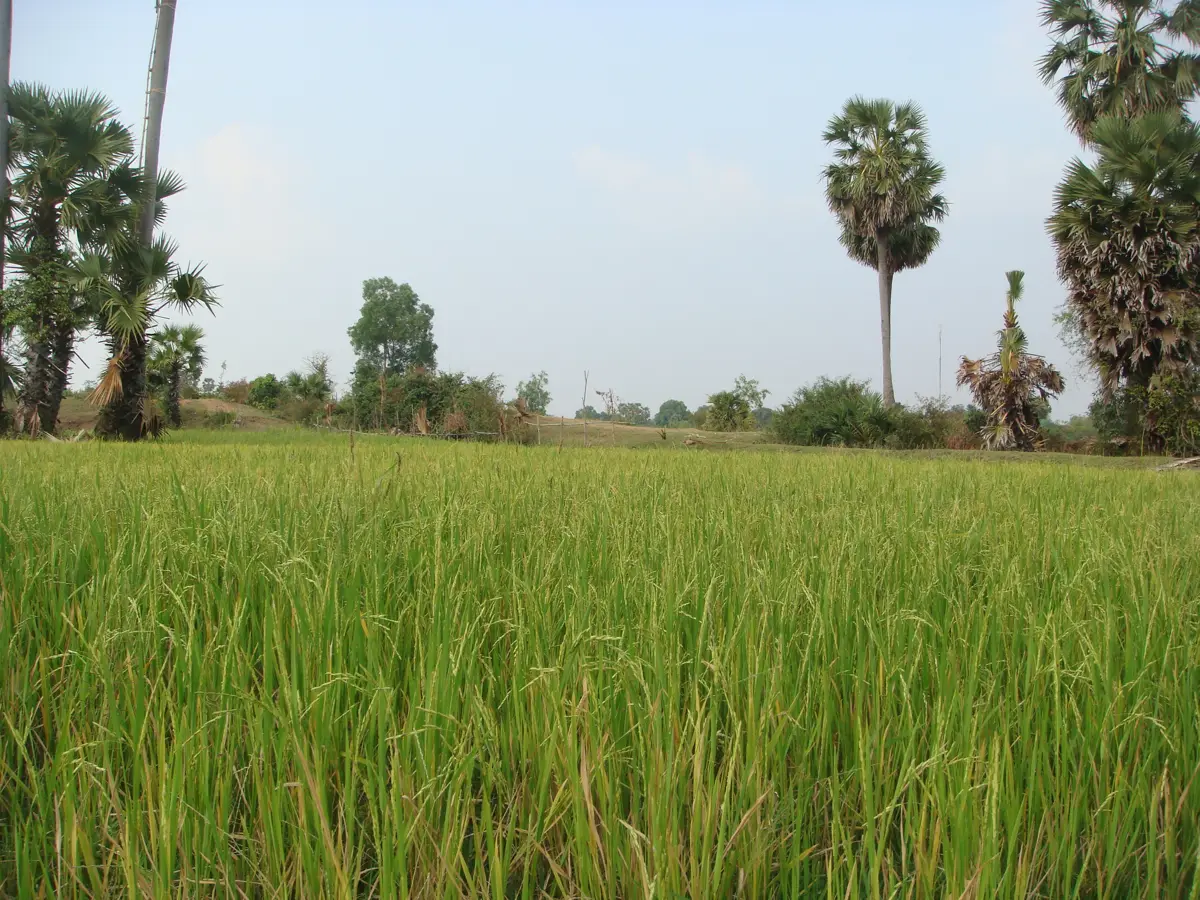
Rice paddies near Baray, Kampong Thom. Photo: Schellack at English Wikipedia, CC BY 3.0, via Wikimedia Commons.
Who is in the hall
Europe is one of those buyers. The European Union took 232,319 tonnes of Cambodian milled rice in the first eight months of the year, 29.3 percent of the total. Only the five ASEAN markets together took more.
Europe also buys the premium end of the crop. Fragrant rice made up nearly 58 percent of Cambodia's rice exports over the same eight months, and much of the premium fragrant grade has gone there for years.
A buyer in Lyon or Rotterdam does not visit a paddy in Kampong Thom before signing. They visit Villepinte. That is why we are going.
What we are bringing
White King Elephant rice for buyers to see and taste, because nobody should be asked to judge fragrant rice by looking at it. And the people who can answer where each bag came from, which province, which season, which mill.
We expect that question more than any other. It is also the one the whole industry here still owes work on, ourselves included.
The question for 2027
We expect one more question on the stand, and would rather raise it here first.
In June the EU published its new tariff preference regulation, Regulation (EU) 2026/1395. Cambodian rice keeps duty-free access under Everything But Arms. From 1 January 2027 the regulation adds an automatic safeguard for rice. If imports from Cambodia and Myanmar rise past a set threshold, the preference is suspended for the rest of that year and a quota applies.
Growth of 67.5 percent in eight months is the kind of number that gets checked against a threshold like that.
A buyer planning a 2027 programme will want to know what happens to the price if the safeguard is triggered in, say, September. We do not have a full answer yet. We will have worked through it before we land, and we will talk about it on the stand.
Where to find us
If you are at SIAL Paris between 17 and 21 October, we are in Hall 8, stand C016, with the Cambodia Rice Federation pavilion. In the exhibitor catalogue we are listed as BRM AGRO.,LTD. There is a Tunisian company with a very similar name in Hall 3. It makes prepared Mediterranean dishes.
Stop by and try ours.
If you are not going, the team will post from the hall during the week.
Other Insight You Might Like...
8 September 2026
The Export Standard Just Arrived in the Domestic Market
Cambodian goods went from 3 percent of the domestic market to about 30 percent, but total industrial output fell. The share moved, the pie shrank, and traceability is what decides who keeps the shelf.
31 August 2026
The Strategy's First Birthday
Cambodia's milled rice strategy turned one. Exports are up 68 percent, the average price per tonne is down, and premium fragrant rice is where the value held.
