Everyone in Cambodian business is quoting the same numbers this week. I think they are the wrong ones.
Here is what is being quoted, all from Nikkei Asia this week:
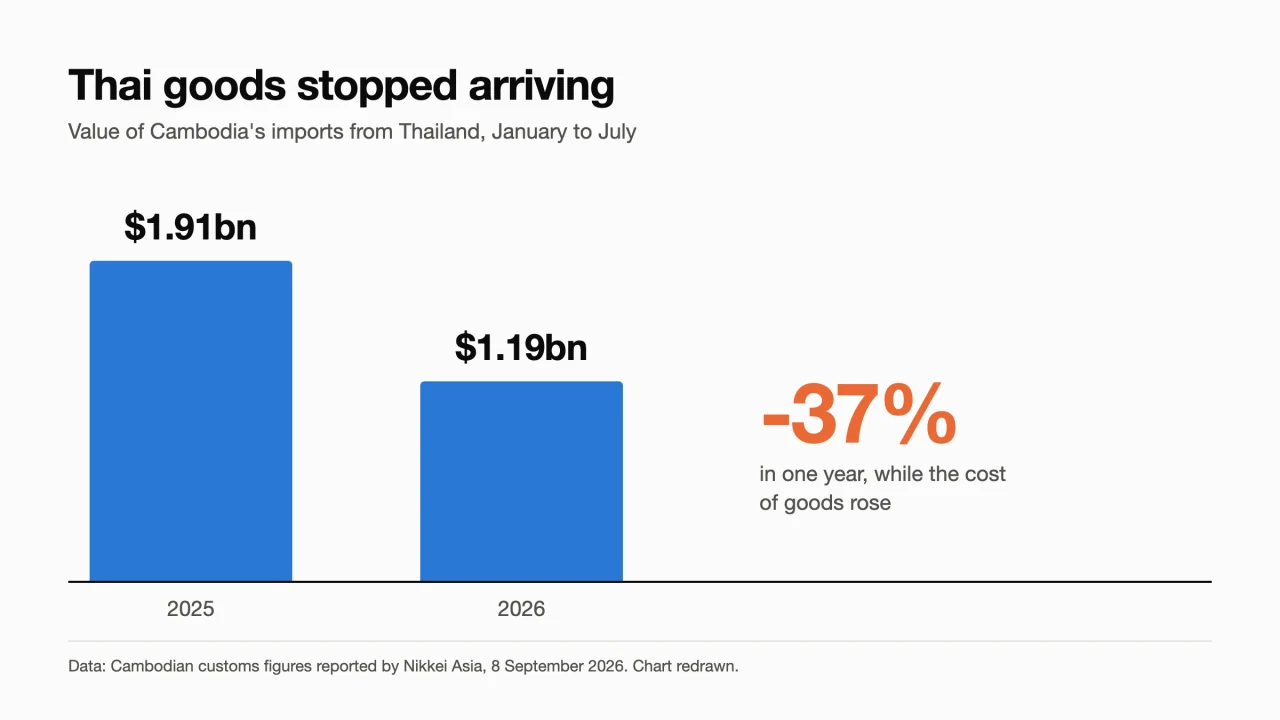
- Imports from Thailand down 37% in seven months, $1.91bn to $1.19bn
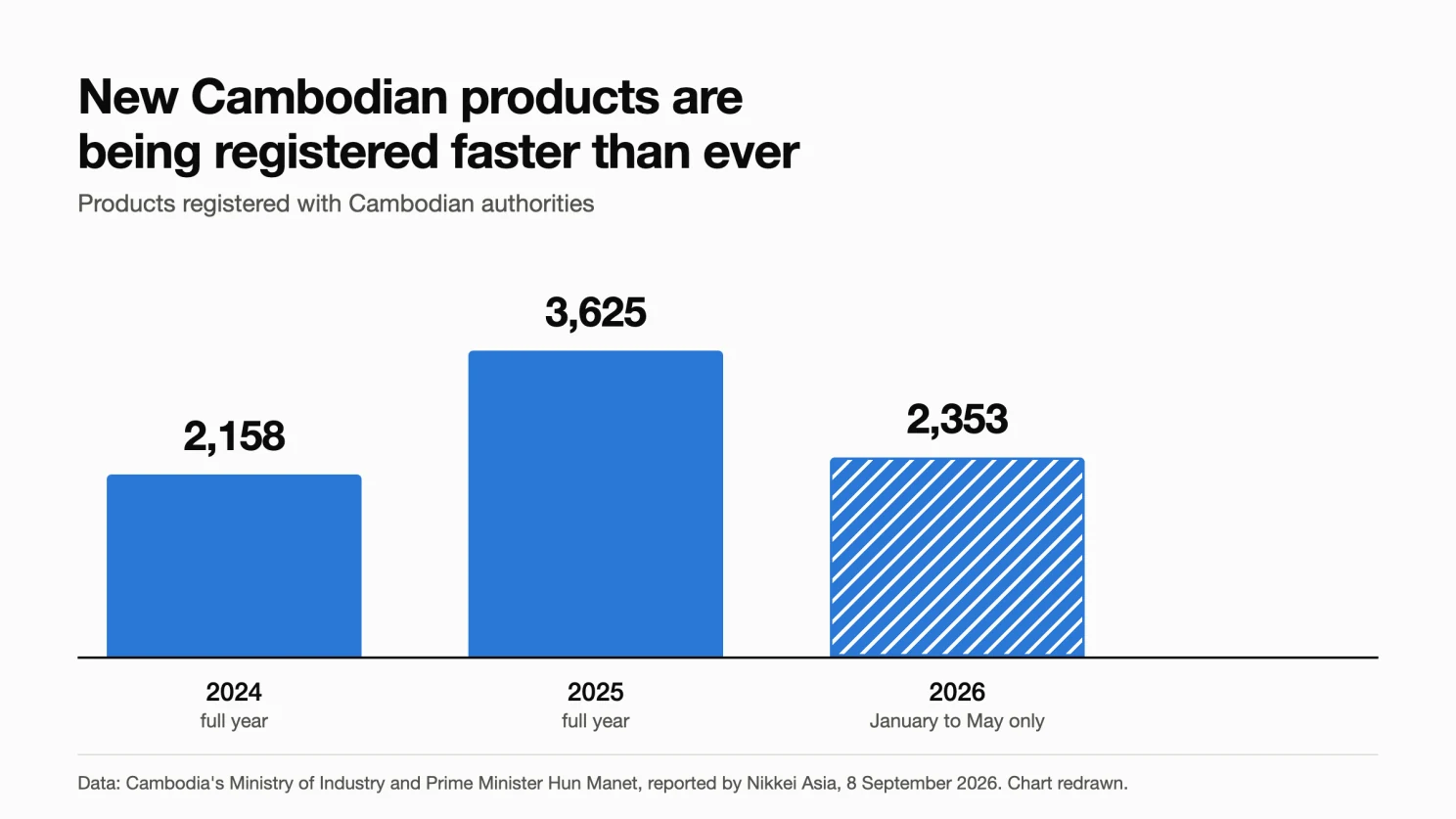
- 2,353 new Cambodian products registered in five months. All of 2024 produced 2,158
- 700 factories with more than 100 workers opened in 2025, double the year before
- Cambodian goods went from 2-3% of what is sold nationwide to about 30%
Read that far and this looks like the best year Cambodian manufacturing has ever had.
Now the number in the same reporting that nobody is repeating.
Cambodia's total industrial output has fallen two years running. Roughly $16 billion in 2023, under $14 billion in 2025. The domestic-market share of it has been flat at about $4 billion the whole time.
More factories. Less output.
The share moved. The pie shrank.
Why that matters if you work in agriculture
A boycott is a demand shock. It is not a capability.
It changed who gets the shelf. It did not change whether the product behind the shelf can be delivered on time, at grade, at the same spec, twelve months a year.
That was the hard part before July 2025. It is still the hard part.
The companies that grew fastest in this window already had the boring parts working. Everyone else got one order they could not repeat.
What buyers actually ask, in order
- Where did this come from, and can you show me.
- Will the same thing arrive next season.
- What does it cost.
Price is third. It has always been third.
Question one means plot, farmer, season, input, moisture at intake, who handled it. Export buyers have asked us that for years. It is why we keep contract, advance and harvest records against the plot, not against a name in a notebook.
Here is what changed this year: Cambodian consumers started asking question one too.
Authorities have seized tonnes of product made outside the country and labelled Cambodian. Coco Khmer's founder says a shelf that held three local balm brands now holds twenty, and he does not believe all of them.
When a flag on a pack stops being evidence, traceability stops being an export formality. It becomes a domestic one.
That is the whole opportunity in this year, and it only pays out for the people who were already doing the work.
What would actually help
Ou Virak at Future Forum wants better energy prices, better transport, lower taxes, less corruption. All four are real constraints on landed cost, and none of them are fixed by patriotic sentiment.
Add enforcement on labelling. Right now the operators printing a Cambodian flag on foreign goods are free-riding on trust that honest producers are paying to build. They will do more damage to Made in Cambodia than any Thai competitor ever did.
Where this lands
The boycott bought Cambodian producers a year of attention we could not have bought ourselves.
Spend it on traceability, consistency and honest labels, and 30% becomes a floor.
Spend it enjoying the demand, and 30% was the peak.
I think it is a floor, but only for the businesses treating this as a deadline rather than a windfall.
So a genuine question for anyone running a business here: is the demand you picked up this year repeatable, or is it borrowed? I would like to know what other operators are actually seeing on the ground.
All figures in this article come from Nikkei Asia, Cambodian consumer companies cash in on Thai goods boycott, 8 September 2026. Charts redrawn from the underlying government data.